7C Goes Green: Dirty Hands, Happy Hearts!
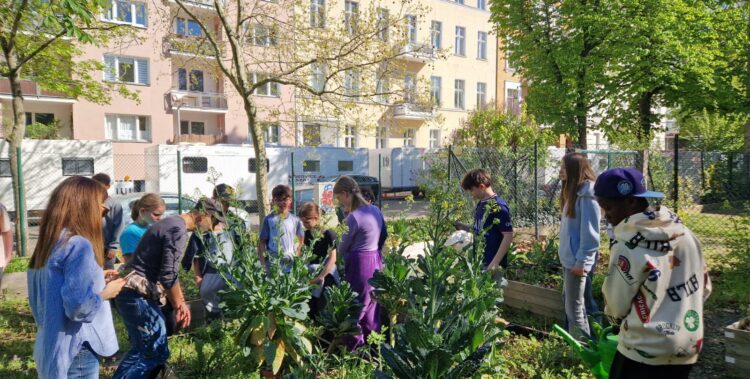
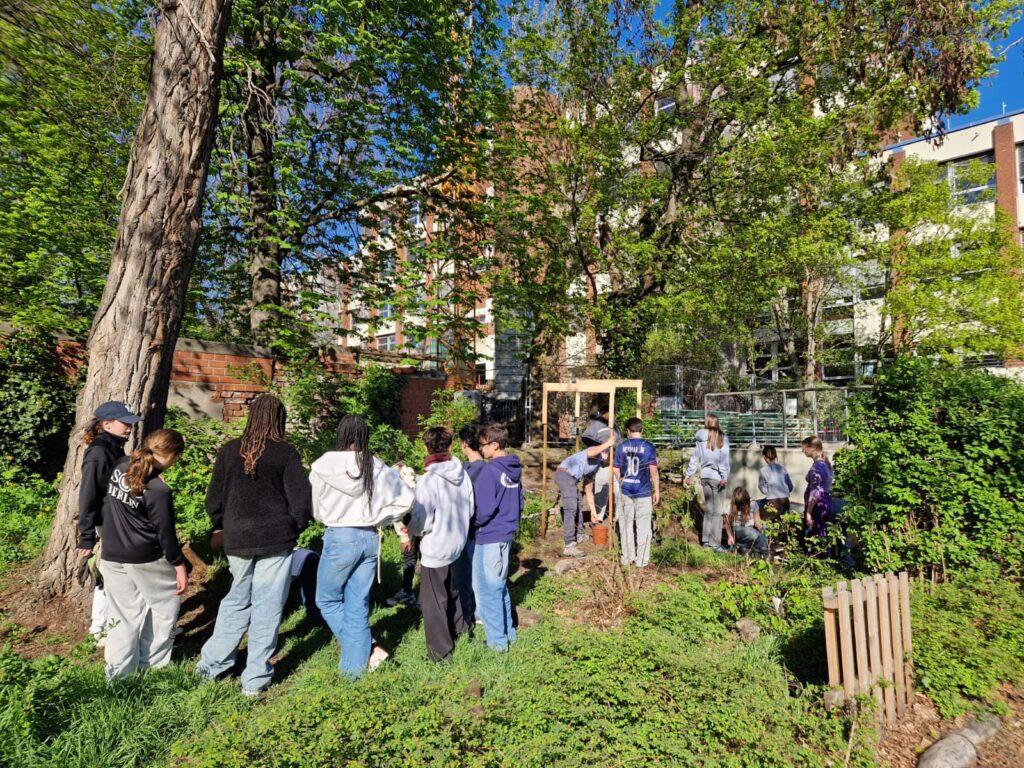
On 11 juin 2026 by Alix SpeyerOn Wednesday, April 22, during VDC, we spent two school periods with AG Jardin, and we absolutely loved it!
The club is guided by our teachers Mrs. Moreau, Mrs. Creignou, Mr. Cilia and Alix from the Service Civique. During this special activity, we also met Jorge, our fantastic gardener, who explained in English all the secrets of our school garden.
What is an “ecosystem”?
The main goal of our garden is to create an ecosystem. An ecosystem is a natural environment where plants, animals, insects, soil, water and humans all work together in balance. It does not need to be perfect or beautiful like in magazines. Instead, it should be alive and useful: a place where birds can find food, wild bees can collect pollen, butterflies can rest and plants can grow naturally.
“Raised beds” and smart gardening
We learned many interesting things about gardening and nature. For example, we discovered “raised beds”, which help plants grow better and make gardening easier. Raised beds are special garden boxes that are built higher than the normal ground level. They are usually made of wood and filled with layers of soil, compost, leaves and other natural materials. They help plants grow better because the soil stays rich in nutrients and keeps warmth for a longer time. Another advantage is that they make gardening easier because you do not need to bend down so much to plant, water or harvest. Smart, isn’t it?
In our school garden, raised beds are very useful because they create a healthy space for vegetables, herbs and flowers while also protecting the plants and making the garden more organized.
Mixing cultures for a better garden
Another important topic was mixed culture, which means planting different vegetables and herbs together because they help each other grow and protect each other from insects.
In our school garden, we have many aromatic herbs that we can actually eat, such as fresh chives, sage, thyme, mint and kale. It was exciting to touch them, smell them, and learn how useful they are in cooking and for nature.
Think before you pull!
We also learned how to recognize plants that should be removed and which ones should stay. Some wild plants, often called “weeds,” are actually very useful because they protect the soil and help insects. Sometimes they should be pulled out, but often they can be left there with their roots because they are part of the natural balance.
This experience was really interesting because we learned some new English vocabulary while discovering nature and gardening at the same time. It was fun, useful and inspiring.
We hope to spend more time in the garden soon! Fancy joining us?
Yours 7C
Here is a glossary for you:
| English | French | German |
| aromatic herbs | les herbes aromatiques | die Kräuter |
| chive | la ciboulette | der Schnittlauch |
| compost | le compost | der Kompost |
| ecosystem | l’écosystème | das Ökosystem |
| gardening | le jardinage | die Gartenarbeit / das Gärtnern |
| kale | le chou frisé | der Grünkohl |
| leaf (pl. leaves) | la feuille (les feuilles) | das Blatt (die Blätter) |
| mint | la menthe | die Minze |
| pollen | le pollen | der Pollen |
| raised beds | les plates-bandes surélevées / les bacs surélevés | die Hochbeete |
| sage | la sauge | der Salbei |
| soil | le sol / la terre | der Boden / die Erde |
| thyme | le thym | der Thymian |
| weeds | les mauvaises herbes | das Unkraut |